
The Path to Healing: A Native American Soldier’s Story of Forgiveness
In a small, resilient community, there lived a Native American soldier named Ahanu, whose name means “He Laughs.” Despite the challenges he had faced, Ahanu carried himself with a light-hearted spirit and an unwavering commitment to his people. He had witnessed and experienced the profound harms inflicted upon First Nations People—attitudes of superiority, emotional and spiritual violence, and the destructive forces of racism and discrimination.
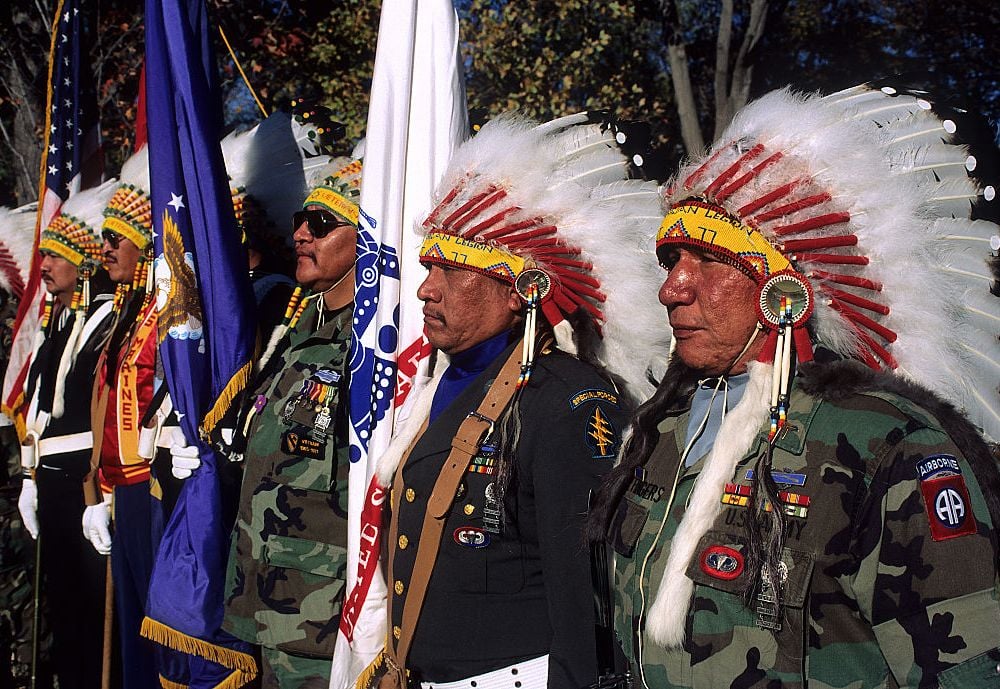
Ahanu’s journey was marked by these struggles, yet his path was also a testament to the strength and resilience of his heritage. Growing up, he heard countless stories from his elders about the ways of their ancestors, who lived in harmony with the land and each other before the settlers arrived. These stories were a source of pride and a reminder of the community’s enduring spirit.
As a soldier, Ahanu served his country with honor, but the battlefield was not only external. He grappled with the internal battles of anger, pain, and the desire for retribution. The weight of historical injustices and personal wounds threatened to consume him, making it difficult to find peace.
During a particularly challenging time in his service, Ahanu found himself in a remote location, far from the comforts of home and family. It was there, in the solitude of the wilderness, that he began to reflect deeply on his journey. The silence of the natural world provided a stark contrast to the turmoil within his soul.
One evening, as Ahanu sat by a small fire, he remembered the teachings of his ancestors. He recalled the wisdom of his elders, who spoke of the Creator’s will for their lives—one that did not align with the violence and hatred they had endured. The elders spoke of the importance of returning to their roots, of healing through forgiveness and reconnecting with their true selves.
In that moment, Ahanu made a decision. He chose to embark on a path of forgiveness, not as a means of forgetting the past but as a way to heal and move forward. He understood that forgiveness was not an act of weakness but a powerful declaration of strength and resilience.
Ahanu began to practice forgiveness in his daily life, starting with himself. He forgave himself for the anger and bitterness he had harbored. He then extended this forgiveness to those who had wronged him, both directly and indirectly. It was a difficult process, but with each step, he felt a weight lifting from his shoulders.
Upon returning to his community, Ahanu shared his journey with others. He spoke of the healing power of forgiveness, of reclaiming their heritage and returning to the ways of their ancestors. He emphasized the importance of living in accordance with the Creator’s will, promoting peace and understanding instead of perpetuating cycles of harm.
Ahanu’s message resonated deeply within the community. Inspired by his example, many began their own journeys of forgiveness and healing. The collective pain of the past was acknowledged, but it no longer defined their present or future. Instead, they chose to honor their ancestors by fostering an environment of compassion, respect, and unity.
Through Ahanu’s journey, the community rediscovered the profound truth that healing comes from within. By embracing forgiveness and reconnecting with their roots, they found a renewed sense of purpose and peace. Ahanu’s legacy was one of hope and resilience, a testament to the power of forgiveness and the enduring strength of the First Nations People.
I hope this story captures the essence of forgiveness and healing from an Indigenous perspective, highlighting the journey of a Native American soldier.
 Notes from Alex
Leave a comment