We
all reach critical points in our lives where our mental toughness is tested. It
might be because of a toxic friend or colleague, a dead-end job, or a
struggling relationship.
Whatever
the challenge, you have to be strong, see things through a new lens, and take
decisive action if you want to move through it successfully.
It
sounds easy. We all want good friends, good jobs, and good relationships.
But
it isn’t.
It’s
hard to be mentally tough, especially when you feel stuck. The ability to break
the mold and take a bold new direction requires that extra grit, daring, and
spunk that only the mentally toughest people have.
It’s
fascinating how mentally tough people set themselves apart from the crowd.
Where others see impenetrable barriers, they see challenges to overcome.
When
Thomas Edison’s factory burned to the ground in 1914, destroying one-of-a-kind
prototypes and causing $23 million in damage, Edison’s response was simple:
“Thank goodness all our mistakes were burned up. Now we can start fresh
again.”
Edison’s
reaction is the epitome of mental toughness—seeing opportunity and taking
action when things look bleak.
There
are habits you can develop to improve your mental toughness. In fact, the
hallmarks of mentally tough people are actually strategies that you can begin
using today.
1. Emotional intelligence.
Emotional
intelligence is the cornerstone of mental toughness. You cannot be mentally
tough without the ability to fully understand and tolerate strong negative
emotions and do something productive with them. Moments that test your mental
toughness are ultimately testing your emotional intelligence (EQ).
Unlike
your IQ, which is fixed, your EQ is a flexible skill that you can improve with
understanding and effort. It’s no wonder that 90 percent of top performers have
high EQs, and that people with high EQs earn $28,000 more annually (on average)
than their low-EQ counterparts.
Unfortunately EQ skills are in short supply. TalentSmart has tested more than a million people, and we’ve found that just 36 percent of these are able to accurately identify their emotions as they happen.
2. Confidence.
“Whether
you think you can, or think you can’t—you’re right.” —Henry Ford
Mentally
tough people subscribe to Ford’s notion that your mentality has a powerful effect
on your ability to succeed. This notion isn’t just a motivational tool—it’s a
fact. A recent study at the University of Melbourne showed that confident
people went on to earn higher wages and get promoted more quickly than others
did.
True
confidence—as opposed to the false confidence people project to mask their
insecurities—has a look all its own. Mentally tough people have an upper hand
over the doubtful and the skittish because their confidence inspires others and
helps them to make things happen.
3. The ability to neutralize toxic
people.
Dealing
with difficult people is frustrating and exhausting for most. Mentally tough
people control their interactions with toxic people by keeping their feelings
in check. When they need to confront a toxic person, they approach the
situation rationally. They identify their emotions and don’t allow anger or
frustration to fuel the chaos. They also consider the difficult person’s
standpoint and are able to find common ground and solutions to problems. Even
when things completely derail, mentally tough people are able to take the toxic
person with a grain of salt to avoid letting him or her bring them down.
4. Knowing how to embrace change.
Mentally
tough people are flexible and are constantly adapting. They know that fear of
change is paralyzing and a major threat to their success and happiness. They
look for change that is lurking just around the corner, and they form a plan of
action should these changes occur.
Only
when you embrace change can you find the good in it. You need to have an open
mind and open arms if you’re going to recognize, and capitalize on, the
opportunities that change creates.
You’re
bound to fail when you keep doing the same things you always have in the hope
that ignoring change will make it go away. After all, the definition of
insanity is doing the same thing over and over again and expecting a different
result.
5. Saying no.
Research
conducted at the University of California in San Francisco showed that the more
difficulty you have saying no, the more likely you are to experience stress,
burnout, and even depression. Mentally tough people know that saying no is
healthy, and they have the self-esteem and foresight to make their noes clear.
When
it’s time to say no, mentally tough people avoid phrases such as “I don’t
think I can” or “I’m not certain.” They say no with confidence
because they know that saying no to a new commitment honors their existing
commitments and gives them the opportunity to successfully fulfill them.
The
mentally tough also know how to exert self-control by saying no to themselves.
They delay gratification and avoid impulsive action that causes harm.
6. Knowing that fear is the No. 1
source of regret.
Mentally
tough people know that, when all is said and done, they will lament the chances
they didn’t take far more than they will their failures. Don’t be afraid to
take risks.
I
often hear people say, “What’s the worst thing that can happen to you?
Will it kill you?” Yet, death isn’t the worst thing that can happen to
you. The worst thing that can happen to you is allowing yourself to die inside
while you’re still alive.
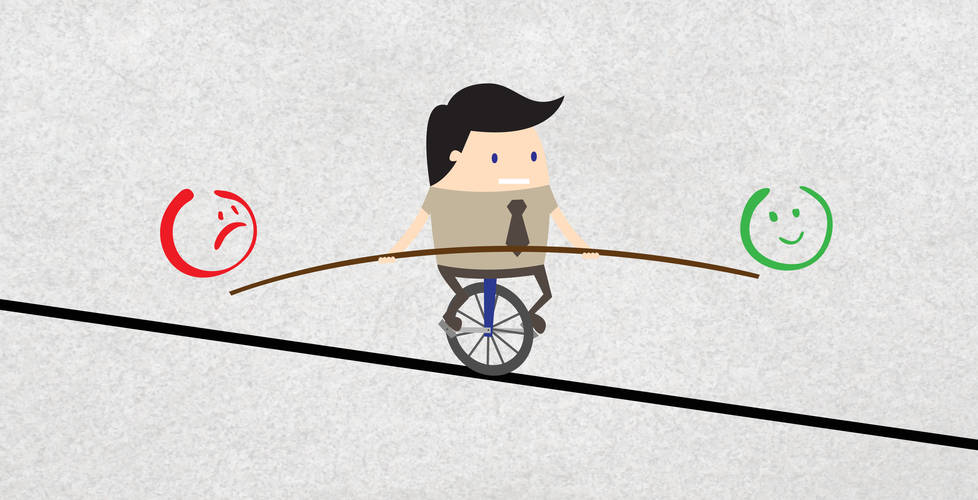
It
takes refined self-awareness to walk this tightrope between dwelling and
remembering. Dwelling too long on your mistakes makes you anxious and gun shy,
while forgetting about them completely makes you bound to repeat them. The key
to balance lies in your ability to transform failures into nuggets of
improvement. This creates the tendency to get right back up every time you fall
down.
7. Embracing failure …
Mentally
tough people embrace failure because they know that the road to success is
paved with it. No one ever experienced true success without first embracing
failure.
By
revealing when you’re on the wrong path, your mistakes pave the way for you to
succeed. The biggest breakthroughs typically come when you’re feeling the most
frustrated and the most stuck. It’s this frustration that forces you to think
differently, to look outside the box, and to see the solution that you’ve been
missing.
8. … Without dwelling on mistakes.
Mentally
tough people know that where you focus your attention determines your emotional
state. When you fixate on the problems that you’re facing, you create and
prolong negative emotions and stress, which hinders performance. When you focus
on actions to better yourself and your circumstances, you create a sense of
personal efficacy, which produces positive emotions and improves performance.
Mentally
tough people distance themselves from their mistakes, but they do so without
forgetting them. By keeping their mistakes at a safe distance, yet still handy
enough to refer to, they are able to adapt and adjust for future success.
9. Refusing to let anyone limit your
joy …
When
your sense of pleasure and satisfaction is derived from comparing yourself with
others, you are no longer the master of your own happiness. When mentally tough
people feel good about something they do, they won’t let anyone’s opinions or
accomplishments take that away from them.
While
it’s impossible to turn off your reactions to what others think of you, you
don’t have to compare yourself with others, and you can always take people’s
opinions with a grain of salt. Mentally tough people know that regardless of
what people think of them at any particular moment, one thing is
certain—they’re never as good or bad as people say they are.
10. … And not limiting the joy of
others.
Mentally
tough people don’t pass judgment on others because they know that everyone has
something to offer, and they don’t need to take other people down a notch to
feel good about themselves.
Comparing
yourself with other people is limiting. Jealousy and resentment suck the life
right out of you; they’re massive energy-stealers. Mentally tough people don’t
waste time or energy sizing people up and worrying about whether or not they
measure up.
Instead
of wasting your energy on jealousy, funnel that energy into appreciation. When
you celebrate the success of other people, you both benefit.
11. Exercising.
A
study conducted at the Eastern Ontario Research Institute found that people who
exercised twice a week for 10 weeks felt more socially, intellectually, and
athletically competent. They also rated their body image and self-esteem
higher. Best of all, rather than the physical changes in their bodies being
responsible for the uptick in confidence, which is key to mental toughness, it
was the immediate, endorphin-fueled positivity from exercise that made all the
difference.
12. Getting enough sleep.
It’s
difficult to overstate the importance of sleep to increasing your mental
toughness. When you sleep, your brain removes toxic proteins, which are
by-products of neural activity when you’re awake. Unfortunately, your brain can
remove them adequately only while you’re asleep, so when you don’t get enough
sleep, the toxic proteins remain in your brain cells, wreaking havoc by
impairing your ability to think—something no amount of caffeine can fix.
Mentally
tough people know that their self-control, focus, and memory are all reduced
when they don’t get enough—or the right kind—of sleep, so they make quality
sleep a top priority.
13. Limiting caffeine intake.
Drinking
excessive amounts of caffeine triggers the release of adrenaline, the source of
the fight-or-flight response. The fight-or-flight mechanism sidesteps rational
thinking in favor of a faster response to ensure survival. This is great when a
bear is chasing you but not so great when life throws you a curve.
When
caffeine puts your brain and body into this hyper-aroused state of stress, your
emotions overrun your behavior. Caffeine’s long half-life ensures you stay this
way as it takes its sweet time working its way out of your body. Mentally tough
people know that too much caffeine is trouble, and they don’t let it get the
better of them.
14. Not waiting for an apology to
forgive.
Mentally
tough people know that life goes a lot smoother once you let go of grudges and
forgive even those who never say they’re sorry. Grudges let negative events
from your past ruin today’s happiness. Hate and anger are emotional parasites
that destroy your joy in life.
The
negative emotions that come with holding on to a grudge create a stress
response in your body, and holding on to stress can have devastating
consequences (both physically and mentally). When you forgive someone, it
doesn’t condone their actions; it simply frees you from being their eternal
victim.
15. Being relentlessly positive.
Keep
your eyes on the news for any length of time, and you’ll see that it’s just one
endless cycle of war, violent attacks, fragile economies, failing companies,
and environmental disasters. It’s easy to think the world is headed downhill
fast.
And
who knows? Maybe it is. But mentally tough people don’t worry about that
because they don’t get caught up in things they can’t control. Instead of
trying to start a revolution overnight, they focus their energy on directing
the two things that are completely within their power–their attention and
their effort.
Bringing it all together.
Mental
toughness is not an innate quality bestowed upon a select few. It can be
achieved and enjoyed.
































 Notes from Alex