We think of a lot of really random stuff in the shower, don’t we?
It used to be you’d just think it and then ignore it. Maybe you’d decide to tell a friend or two.
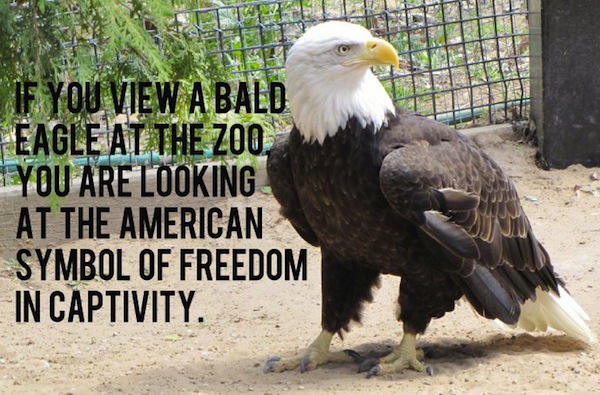
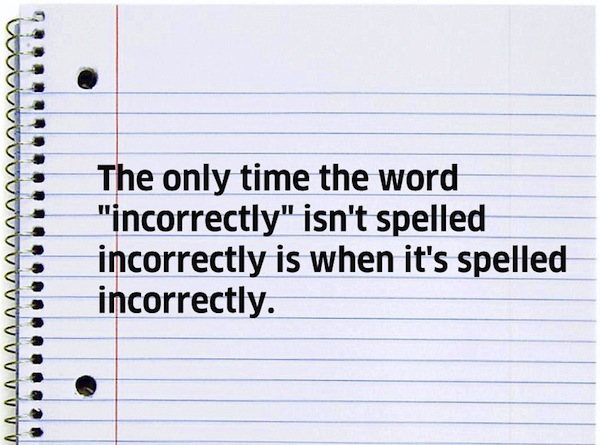
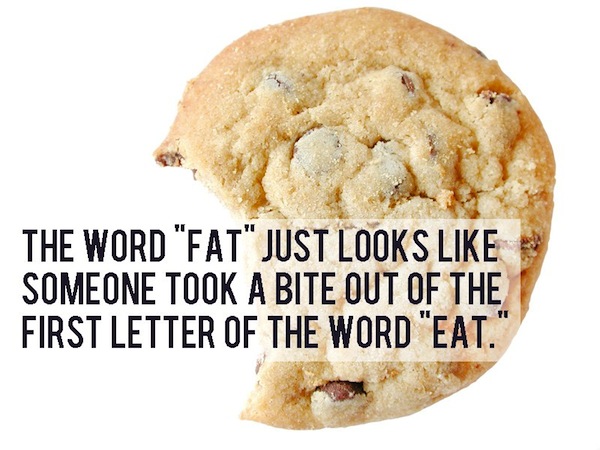
Well thanks to the Shower Thoughts Reddit, we are now able to share these incredibly dumb, yet insanely brilliant, eye-openers with the rest of the world.
Here are some of the best shower thoughts to ever make their way online.
Since the late 1980s, scientists have been tracking a whale across the Pacific Ocean.
It
sings at a sonic frequency higher than any other species of whale: at 52 Hertz,
just above the lowest note on a tuba.
The
whale calls out; no one answers.
It’s
been nicknamed the loneliest animal in the world.
Keep It Simple
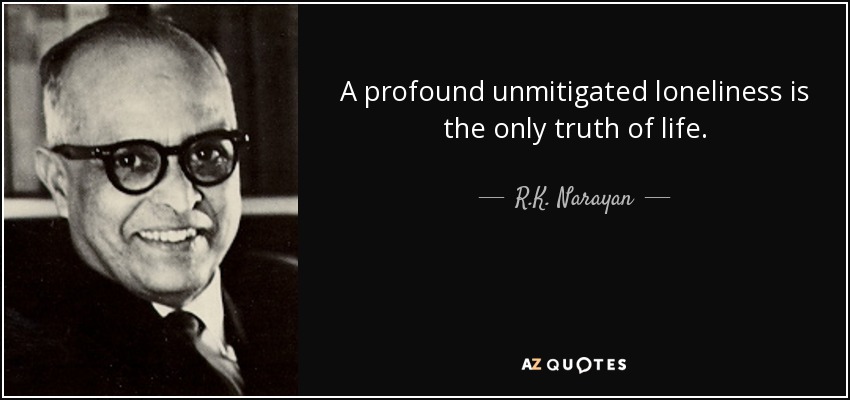
Loneliness.
It’s
become a dirty word, loaded with shame and stigma. No one admits to feeling it.
Scientists diagnose ‘loneliness epidemics’ as if it’s an infectious disease. We fear hearing the word spoken aloud in case we catch it.
It
terrifies us.
Perhaps
that’s why children are sent to their rooms to be alone as punishment. Adults
without families are automatically pitied.
But
wait — isn’t there a difference between solitude and loneliness?
We
use the two interchangeably because we’ve been conditioned to think of them as
the same state; someone who spends time alone must, naturally, be lonely.
But
that’s not the case.
Loneliness
is being alone — and not liking it. It’s a feeling.
Solitude
is being alone — and content. It’s a choice.
This
brings us to an interesting paradox: if you can master solitude, you’ll never
feel lonely again.
Keep It Simple
Connected but alone
From
the telegram to the phone to the mobile to the internet, all major cultural
inventions have served the same purpose: to bring us closer together.
Today,
we’ve reached peak hyper-connectivity. We can cross oceans at the touch of the
button, speak to someone, anywhere, 24/7.
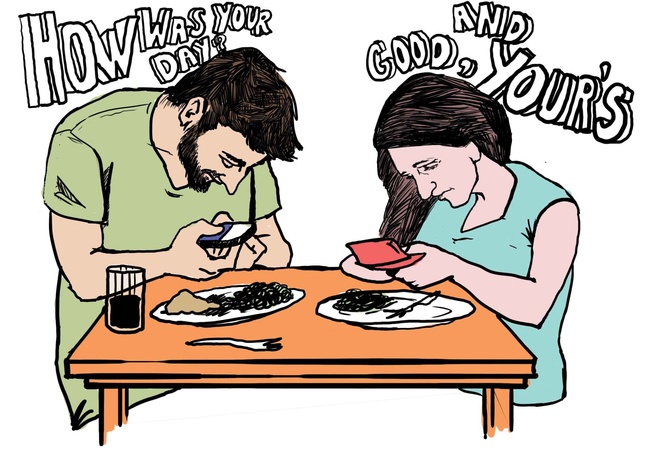
We’ve never been so connected — superficially, at least.
And yet, statistics report that we’ve never felt so lonely.
The United Kingdom’s Prime Minister Theresa May has announced aloneliness minister.
Australia organized a Coalition to End Loneliness.
One in five Americans reports rarely or never feeling close to others.
And a recent study of over 20,000 people found that nearly half of respondents sometimes or always felt lonely.
The technologies connecting us are isolating us.
Keep It Simple
Here’s the truth about loneliness
Loneliness
is an internal state that doesn’t — as most people assume — depend on
external factors.
In
fact, it’s largely unrelated to what’s going on around us.
You
can be surrounded by people, lying in bed next to your partner, at a party, or
in the office, and still feel lonely to your core.
And
you can be alone, millions of miles away from any human contact, and still feel
joyfully connected to the world.
It’s
less about our circumstances, more about how we react to them.
Keep It Simple
Our fear of solitude is really fear of boredom
We
read our phones while we brush our teeth. We listen to Podcasts on the subway.
We can’t simply be. We feel compelled to always do.
We can’t allow ourselves a moment of self-inflicted boredom.
We’re
scared of where this boredom will take us.
Of what we will hear in our heads if we lapse into true silence: hopes, dreams, shame, embarrassment… Fear of failure.
We
want to be entertained, constantly. The alternative — introspection —
intimidates us.
And so, we drown out our discomfort with distractions.
But
that doesn’t mean the discomfort will go away.
Connected
yet lonely
Keep It Simple
The
Western world promotes two glaring contradictions:
1.
Know yourself.
2.
The human species is born to be social.
We’re
told happiness comes from within.
And
yet, we’re never taught how to be alone with ourselves.
We
put enormous effort into training children in how to be social.
We
send them to playgroups and playdates.
We
tell them not to fight, not to swear, to be polite.
But
we deprive them of one thing: the capacity to be alone, and content.
We
celebrate self-esteem. But we stigmatize spending time with the person we
should know, and like, the best: ourselves.
Keep It Simple
The joy of being alone
Real
solitude is almost impossible to experience in the modern world.
And
for some, this makes it the ultimate privilege.
Being
sent to your room as punishment?
“It should be a reward,” says Sara Maitland, author of How To Be Alone.
“It
should be: ‘You’ve been so good that now you can go to your room to be by
yourself and do anything you like!’”
Some people choose a life of complete solitude. Others know they can harness times of stillness to find answers to questions, solutions to problems.
After
a certain amount of time by myself, I’d begin to panic.
But others, I’d push through that initial discomfort. And it was on those days that my most original ideas came to me. Boredom is the most important emotion that helped me to grow JotForm to almost 4 million users.
Solitude deprives you. It stretches you. It illuminates. And this breeds creativity.
Zat Rana describes this process perfectly:
When
you surround yourself with moments of solitude and stillness, you become
intimately familiar with your environment in a way that forced stimulation
doesn’t allow.
The
world becomes richer, the layers start to peel back, and you see things for
what they really are, in all their wholeness, in all their contradictions, and
in all their unfamiliarity. You learn that there are other things you are
capable of paying attention to than just what makes the most noise on
the surface.
Alone
but not lonely: how to utilize solitude
Keep It Simple
Solitude
is scary because it reminds us of how small we are. We realize that the world
has, and will, continue turning on its axis without us.
We
are insignificant. In some ways, it’s a preview of death. That’s why it requires
great inner strength to be alone. To know that you are not going to disappear
into thin air without human contact.
That strength is a muscle we can exercise through deliberate practice.
And
like any fear, the only way to overcome solitude is to face it. Ease yourself
in, with 10 minutes, then 20, then 30, of solitude a day, or week, or month.
As I’ve written before, there’s great power in doing nothing at all.
Letting
your boredom take you will be uncomfortable at first. It might be painful —
even profoundly so — but before long, this will ease.
The
interesting thing about the 52 Hertz whale isn’t its loneliness. After all, it
can’t be lonely; loneliness is a man-made condition.
No.
What sets the 52 Hertz whale apart from other species is its self-reliance. Its
strength.
It’s
so powerful that it can survive for decades completely by itself.
Luckily
for us, solitude will always be a choice, not an existence. It’s true that
humans are born to be social.
But
when we find strength — rather than fear — in solitude, we will live far richer
lives: with others, and with ourselves.
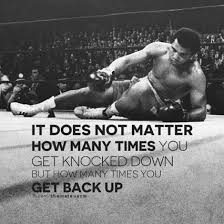
In the movie Creed, boxer
Adonis Creed takes a brutal punch in the fight of his life, and gets knocked to
the ground. He hits the floor hard. The people in his corner are shouting, “Get
up! Get up!” His opponent is on the ropes celebrating, thinking it’s over.
But while Creed is out, his mind is scrolling through all he’s
been through up until that point, and all the people who love and motivate him.
Like a jolt, he’s up before the count of ten — and is back in the fight.
Creed’s boxing life may seem to bear little resemblance to our
lives as believers. Though we encounter battles, we don’t train intensely for
them, with dedicated professionals to put us through our paces and shore up our
weaknesses. We don’t know the time, date, and location of our next bout, such
that we can show up prepared. Our battles are spiritual, seemingly upending the
comparison.
But as the apostle Paul showed, boxing (like running) provides a vivid metaphor for the Christian life (1 Corinthians 9:26).
Keep It Simple
You Will Get Hit
We often don’t see it coming. It could be a health crisis, loss
of a loved one, an employment shake-up, betrayal, or some form of persecution.
Or maybe it’s something we’re aware of, something we thought was mild or
temporary, but it “hits” when it morphs from hill to mountain.
The question is not whether we will find ourselves in a battle, but when. “Count it all joy, my brothers, when you meet trials of various kinds” (James 1:2). Paul likewise says it’s part of our privilege as believers. “It has been granted to you that for the sake of Christ you should not only believe in him but also suffer for his sake” (Philippians 1:29). We remember vividly the times we have been hit. Many of us are still recovering.
Moreover, we have an enemy who specializes in sucker punches. He
schemes how he will execute, watching for opportune times, hitting when he
thinks it will connect with force. Nothing touches us apart from the sovereign
sanction of the Lord. The Lord uses it for his purposes and for our good. But
there’s a reason he tells us to remain fully clothed in his armor. Forces are
arrayed against us, shooting fiery arrows. There are times we will get hit.
Keep It Simple
You Will Go Down
Sometimes we are hit with such force that we are knocked down.
Life takes a hard tilt, and the effect is tantamount to being thrown face down
to the ground. The circumstance is devastating, the pain excruciating. Try as
we might, in that moment it is difficult to grab hold of any semblance of joy
or hope.
The apostle Paul wrote, “We are afflicted in every way, but not crushed; perplexed, but not driven to despair; persecuted, but not forsaken; struck down, but not destroyed” (2 Corinthians 4:8–9). We rejoice that, because of Christ, we are not crushed, despairing, forsaken, or destroyed.
But the other words are true, as well. For the sake of Christ,
we may find ourselves afflicted in every way, perplexed, persecuted, and struck
down.
Peter drives home this reality as well when he says, “Beloved, do not be surprised at the fiery trial when it comes upon you to test you, as though something strange were happening to you” (1 Peter 4:12). The ordeal is fiery, and it does come upon you. It packs a knockout punch.
The enemy’s goal is to devour (1 Peter 5:8). The Lord’s goal is to grow us in faith, trust, and endurance.
Keep It Simple
You Can Get Up
When we are hit hard and
knocked to the ground, it feels as if our strength is gone. The bruises of
hurt, heartache, and pain keep us pinned. As in Creed, the
enemy celebrates, thinking it’s over. But the Lord is faithful. He has given us
powerful truths to hold onto when we are down — truths that help us get
up, again.
“He who is in you is greater than he who is in the world” (1 John 4:4). Nothing “will be able to separate us from the love of God in Christ” (Romans 8:39). God himself will perfect, confirm, strengthen and establish us after we’ve suffered for a little while (1 Peter 5:10). Even this — being hit so hard that we are knocked to the ground — will work together for good (Romans 8:28).
We remember that Jesus was once down, crucified, and buried and, for a time, the enemy surely rejoiced. But Jesus rose on the third day, and the same power that raised him from the dead is at work in us who believe. We get up because we’ve been graciously given eternal life, and what we endure in this life cannot compare to the glory to come (2 Corinthians 4:17).
We never stand alone, (though, at times, you may feel alone), toe-to-toe with the enemy, in our battles. Our God, mighty in power, fights for us. Shod in his armor, we stand firm. And even if we’re knocked down, the truth is that he is upholding us with his hand (Psalm 37:24).







 Notes from Alex