The Dark Night Of The Soul

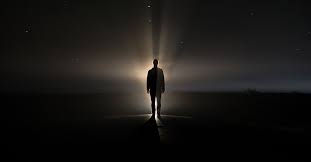
The Dark Night of the Soul

In the heart of a forgotten forest, where ancient trees whispered secrets to the wind, there lived a solitary soul named Elowen. She was neither young nor old, but her eyes held the weight of centuries. Elowen had seen empires rise and fall, witnessed love bloom and wither, and felt the ebb and flow of hope and despair.

Elowen’s days were spent tending to her garden—a patch of wildflowers that defied the shadows. Each bloom held a story: the crimson poppy that remembered lost warriors, the moonflower that sang to the stars, and the black rose that thrived on sorrow.

One moonless night, as Elowen sat by her hearth, a visitor arrived. His name was Alistair, a wanderer with eyes as stormy as the sea. He carried a burden heavier than any mortal could bear—a heart shattered by betrayal. Alistair sought solace, and the forest led him to Elowen’s door.

“Welcome,” Elowen said, her voice like wind through leaves. “What brings you to this forgotten place?”

Alistair hesitated, then spoke of love betrayed, of promises broken, and of a darkness that threatened to consume him. Elowen listened, her eyes reflecting the pain etched into his soul.

“Ah,” she said softly. “You are in the dark night of the soul.”

Alistair frowned. “Dark night?”

Elowen gestured toward the window. “Look outside. See how the moon hides, leaving only shadows? That is the dark night—the time when the soul grapples with its deepest wounds. It is a journey through despair, but also a path toward transformation.”

Alistair scoffed. “Transformation? What good is that when my heart lies shattered?”

Elowen rose, her bare feet touching the cool earth. “Come,” she said. “We shall walk the forest together.”

They stepped into the night, the trees leaning in as if to listen. Elowen guided Alistair deeper, where the darkness thickened. He stumbled, but she steadied him.

“Feel the pain,” Elowen whispered. “Let it wash over you. Only by facing it can you emerge anew.”

They reached a clearing, and there, bathed in starlight, stood a mirror—a mirror that reflected not their physical forms, but their inner selves. Alistair gazed into it, and what he saw made him weep.

“I am broken,” he confessed.

Elowen touched his cheek. “Brokenness is the soil from which strength grows. Look again.”

Alistair looked, and this time, he saw not shattered pieces, but threads of light weaving together. His heartache became a tapestry of resilience, his betrayal a lesson in forgiveness.

As dawn approached, Elowen led Alistair back to her cottage. “Remember,” she said, “the dark night is a passage, not a prison. Let it shape you, but do not let it define you.”

Alistair left the forest, his heart still tender, but no longer shattered. He carried Elowen’s wisdom with him, and as seasons turned, he became a healer of hearts.

And so, in the heart of the forgotten forest, where ancient trees whispered secrets, Elowen tended her garden. The black rose bloomed, its petals kissed by both sorrow and hope.

For in the dark night of the soul, even shadows hold the promise of dawn. 

My First Solo Flight

The First Solo Flight


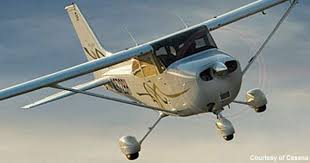
The sun hung low on the horizon, casting a golden hue across the tarmac. My heart raced as I stood beside the small Cessna, its wings stretching out like a bird ready to take flight. The instructor’s words echoed in my mind: “You’re ready. Trust yourself.”

I climbed into the cockpit, my hands trembling. The familiar controls felt foreign—each lever, each gauge, a puzzle waiting to be solved. The engine roared to life, and suddenly, I was alone. Just me, the plane, and the vast expanse of sky.

I taxied to the runway, my palms slick with sweat. The wind whispered secrets through the open window. I glanced at the altimeter—it was time. With a deep breath, I pushed the throttle forward. The plane surged, and suddenly, I was hurtling down the runway, wheels lifting off the ground.

The world fell away. The houses, the trees—they shrank to miniature versions of themselves. I leveled off, and the quiet enveloped me. No more dual controls, no more safety net. Just the hum of the engine and the rush of air against the wings.

I circled the field, gaining confidence with each turn. The fear melted into exhilaration. I dipped the wing, feeling the G-forces press me into the seat. The sky stretched out infinitely, and for the first time, I understood what it meant to be truly free.

Then came the moment—the one I’d been both dreading and anticipating. The instructor’s voice crackled over the radio: “You’re ready for your solo landing.” My heart pounded. I lined up with the runway, my eyes fixed on the numbers painted in white.

The descent was smooth, the ground rising to meet me. I flared, pulled back on the yoke, and touched down. The wheels kissed the asphalt, and suddenly, I was rolling, the plane slowing to a stop. I’d done it—I’d flown solo.

As I taxied back, the grin on my face felt permanent. The instructor met me at the hangar, clapping me on the back. “Congratulations,” he said. “You’re a pilot now.”

And in that moment, I knew—I’d found my wings. The sky was no longer a distant dream; it was my canvas, my playground. From that day forward, every flight would be an adventure, every cloud a companion.

The loud sound of silence—the absence of the instructor’s voice, the absence of doubt—had become my symphony. And as I shut down the engine, I whispered my gratitude to the wind, to the sky, and to the little Cessna that had carried me into the blue.

The Loud Sound of Silence

The Loud Sound of Silence

In the quietude of twilight’s embrace, Where shadows merge and whispers trace, The silence blooms, a symphony untold, Its notes woven in threads of moonlight gold.

Within its hush, secrets find their rest, Echoes of forgotten dreams, unexpressed, A language of absence, profound and deep, Where heartbeats pause, and sorrows sleep.

The rustle of leaves, a soft refrain, As nightfall weaves its mystical skein, Stars shimmer like tears in cosmic eyes, And silence dances, veiled in disguise.

Yet, within its stillness, galaxies collide, Universes birthed, destinies implied, The quietude holds both void and creation, A paradoxical hymn of cosmic elation.

So listen, dear soul, to the silent song, Where solitude and wonder both belong, For in the loud sound of silence, we find, The universe’s heartbeat—an eternal bind.

Positive Mental Health – Whispers of the Soul

Whispers of the Soul

In the quiet chambers of the mind, Where shadows dance and memories unwind, Lies a fragile garden, tended with care, Where blooms of hope and despair intertwine.

Anxiety, a tempest that rages within, Its thunder echoing doubts, its lightning sharp. Yet, in its storm, we find resilience, A strength to weather the darkest night.

Depression, a heavy cloak draped upon shoulders, Weighing down the spirit, dimming the light. But even in its depths, a seed of courage, A stubborn will to seek dawn’s tender embrace.

Loneliness, a silent ache that echoes, A hunger for connection, a thirst for kin. Yet, in solitude’s embrace, we learn compassion, To hold another’s hand, to say, “You’re not alone.”

Hope, a fragile butterfly, wings unfurling, Elusive and delicate, yet steadfast. It flutters near the heart, whispering, “Tomorrow holds promise; you are not defeated.”

And so, we tend this garden of the soul, Watering it with tears, nurturing it with love. For mental health is not weakness, But the art of blooming despite life’s storms.


May this poem remind you that you’re not alone, and there’s beauty even in the struggle.

New Ship name after legendary Navy SEAL and Alaska Native

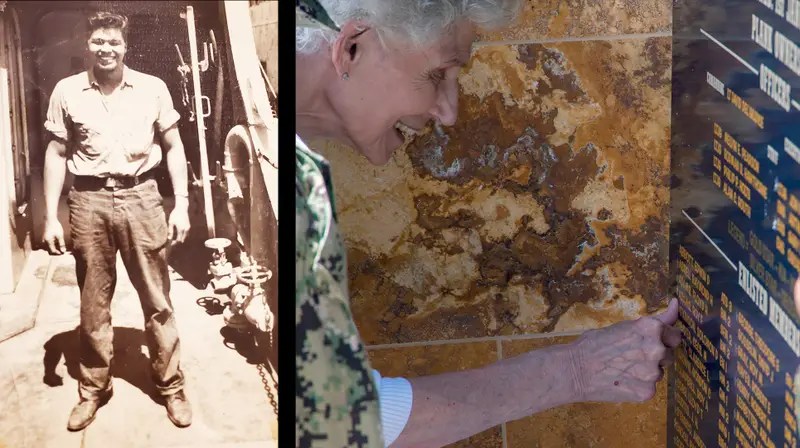
Solomon Atkinson, an Alaska Native, was one of the first 60 Navy SEALs in 1963. Now a new Navy ship will be named after him.

A plankholder of the Navy SEAL teams, and one of the service’s most decorated Alaska Native sailors, will be remembered as the namesake of a new Navy ship.

The USNS Solomon Atkinson is scheduled to launch in 2025 as the service’s 12th Navajo-class Towing, Salvage, and Rescue ship, a series of tender boats that officials have named after notable Native American sailors.

Solomon Atkinson died in 2019 in his hometown of Metlakatla, Alaska. His casket told the tale of his life. The side was covered in a mural of Native Alaskan art, depicting animals and symbols of the fishing village of Metlakatla, in the state’s southeastern arm. Like many Tsimshian people in Metlakatla, Atkinson had been raised on commercial fishing and hunting.

On the lid, between two crosses, was the engraved trident of the Navy SEALs, in whose history Atkinson looms large.

Solomon Atkinson’s casket in 2019, commemorating both his Tsimshian heritage as an Alaska Native and his 22-year career as a Navy SEAL and plankholder for SEAL Team 1. (Laddie Shaw/courtesy photo).

After qualifying for UDT duty, Atkinson became a “plankholder” at SEAL Team 1 as one of the first 60 sailors officially assigned as SEALs in 1962. Atkinson quickly became one of the elite unit’s earliest leaders, helping develop SEAL teams from their humble beginnings as little more than beach scouts into the feared commando teams of Vietnam.

As a SEAL, Atkinson deployed to Korea and served three combat tours in Vietnam. There he was awarded a Purple Heart, a Bronze Star, and a Navy Commendation Medal with Combat “V.”

He also spent time as a feared SEAL instructor for new recruits, earning the nickname “the Mean Machine”.

He had to set aside the harsh techniques known to SEAL recruits for another training assignment. As the space race heated up, Atkinson worked with astronauts in specially constructed pools that simulated working in weightless environments. The astronauts he trained included Neil Armstrong, Buzz Aldrin, and Jim Lovell at the Underwater Swimmers School in Key West, Florida.

This article was written by a writer at, “Task & Purpose” – Matt White

A Grateful Heart

Grateful Heart

In the quiet of dawn, when the sun peeks through, I count my blessings, one by one, and thank the morning dew. For life’s simple gifts—the air I breathe, the sky so blue, I offer my gratitude, as the day begins anew.

The laughter of children, like a melody so sweet, Their innocent joy, their boundless energy—life’s heartbeat. I’m grateful for their laughter, their unbridled play, Reminding me that wonder and delight are never far away.

The embrace of a friend, a warm and steady hand, Through trials and triumphs, they help me withstand. Their presence, a shelter in life’s tempestuous sea, I’m thankful for their love, their unwavering loyalty.

The whisper of leaves, as they dance in the breeze, Nature’s symphony, a soothing lullaby that puts my mind at ease. For the rustling trees, the blooming flowers, the earth’s embrace, I bow my head in reverence, grateful for this sacred space.

And when the shadows lengthen, and night draws near, I reflect on the day’s journey, both joy and tear. For every moment, every lesson, every twist and turn, I’m grateful for life’s tapestry—the threads that intertwine and burn.

So let us raise our voices, lift our hearts in praise, For gratitude is a beacon that guides us through life’s maze. In the grand symphony of existence, let our souls take part, For a grateful heart knows the truest art.

Feel free to share this poem with anyone you’d like, and may your days be filled with gratitude and grace! 🙏✨

What is forgiveness?

Forgiveness is the intentional and voluntary process of letting go of feelings of resentment, bitterness, or anger toward someone who has wronged you. It involves releasing the desire for revenge or retribution and may include a conscious decision to replace negative emotions with positive ones, such as understanding, empathy, and compassion.

Forgiveness does not necessarily mean forgetting the wrongdoing or excusing the harmful behavior. Instead, it focuses on the personal benefits of forgiveness, which can include emotional healing, improved mental and physical health, and the ability to move forward in life without being weighed down by past grievances.

Forgiveness can occur in different contexts:

  1. Interpersonal Forgiveness: Involves forgiving others who have hurt us.
  2. Self-Forgiveness: Involves forgiving ourselves for mistakes or wrongdoings we have committed.
  3. Societal or Collective Forgiveness: Can occur within communities or nations, often related to historical injustices or conflicts.

The process of forgiveness can vary from person to person but generally includes the following steps:

  1. Acknowledgment: Recognizing and accepting the hurt and the emotions associated with it.
  2. Reflection: Understanding the impact of the hurt and why it occurred.
  3. Empathy: Trying to see the situation from the perspective of the person who caused the hurt.
  4. Decision: Making a conscious choice to forgive.
  5. Release: Letting go of the negative emotions associated with the hurt.

Ultimately, forgiveness is a personal journey that contributes to emotional and psychological well-being, fostering healthier relationships and a more peaceful life.

Blog at WordPress.com.

Up ↑