

what would it take to reopen the annette island airport?
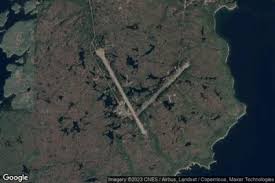
Reopening Annette Island Airport would involve several key steps and considerations:
1. Infrastructure Assessment and Repairs: o Runway and Taxiway Maintenance: The runways, especially the asphalt surface of Runway 12/30 and the gravel surface of Runway 2/20, would need thorough inspection and repairs1. o Facilities and Equipment: Ensuring that all airport facilities, including lighting, signage, and communication systems, are operational and up to current standards1.
2. Regulatory Compliance: o FAA Certification: The airport would need to meet Federal Aviation Administration (FAA) requirements for safety and operations1. o Environmental Impact Assessments: Conducting necessary environmental reviews to comply with federal and state regulations1.
3. Operational Readiness: o Staffing: Hiring and training staff for airport operations, including ground handling, security, and air traffic control (if applicable)1. o Emergency Services: Establishing or updating emergency response protocols and ensuring the availability of emergency services1.
4. Community and Stakeholder Engagement: o Local Support: Engaging with the Metlakatla Indian Community and other local stakeholders to gain support and address any concerns1. o Funding and Investment: Securing funding for the necessary upgrades and ongoing operations, possibly through federal grants, private investment, or tribal funding1.
5. Marketing and Partnerships: o Airline Partnerships: Negotiating with airlines to establish routes and services to and from the airport1. o Promotion: Marketing the airport to potential users, including tourists, businesses, and cargo operators1.
A little History of Annette Island Airport:

Annette Island Airport (IATA: ANN, ICAO: PANT, FAA LID: ANN) is located on Annette Island in the Prince of Wales – Hyder Census Area of the U.S. state of Alaska.[1] It is located 5 nautical miles (9 km) south of Metlakatla, Alaska.[2] The airport was established as the Annette Island Army Airfield during World War II and initially served as a military airbase.
Facilities and aircraft [edit] Annette Island Airport has two runways: 12/30 is 7,493 by 150 feet (2,284 x 46 m) with an asphalt surface and 2/20 is 5,709 by 150 feet (1,740 x 46 m) with a gravel surface. For the 12-month period ending January 16, 1990, the airport had 8,400 aircraft operations, an average of 23 per day: 64% general aviation, 24% military, and 12% air taxi.[1]
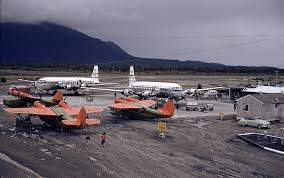
Historical airline service [edit] Prior to the opening of the Ketchikan International Airport (KTN) in 1973, the Annette Island Airport served as the primary airfield for scheduled passenger service for Ketchikan which is located approximately 20 air miles to the north. In 1947, Pan American World Airways was operating daily nonstop service to Seattle and Juneau with Douglas DC-4 prop aircraft with no change of plane flights operated twice a week to Whitehorse in the Yukon Territory of Canada via Juneau and then continuing on to Fairbanks, Galena and Nome in Alaska.[3] Pan Am later operated Douglas DC-6B and Boeing 377 Stratocruiser aircraft into the airport.[4] During the late 1950s, Pacific Northern Airlines (PNA, the successor of Woodley Airways) served the airport with Lockheed Constellation propliners with nonstop service to Seattle and Juneau as well as direct, no change of plane flights to Anchorage, Cordova and Yakutat.[5] The airport’s first jet service arrived during the early 1960s. In 1963, Pan Am was flying Boeing 707 jetliners into the airport with a daily roundtrip routing of Seattle – Annette Island – Juneau.[6] By 1965, Pacific Northern was operating Boeing 720 jetliners on nonstop flights to Seattle and Juneau as well as on direct services to Anchorage via Juneau.[7] In 1967, Pacific Northern was acquired by and merged into Western Airlines which continued to operate jet service into the airport.[8] By 1968, Western was serving the airport with Boeing 720B jetliners with nonstop service to Seattle and Juneau as well as direct, no change of plane flights to Portland, OR, San Francisco and Los Angeles.[9] In 1971, the federal Civil Aeronautics Board (CAB) awarded Alaska Airlines new route authority which enabled this air carrier to begin jet service into Annette Island Airport thus replacing Western.
With the opening of the Ketchikan International Airport in 1973, Annette Island lost all scheduled passenger jet flights as such airline service then moved to the then-new Ketchikan airport. Prior to the opening of the Ketchikan airport in 1973, Alaska Airlines was also operating scheduled flights with Super Catalina and Grumman Goose prop-driven amphibian aircraft on the short hop between Annette Island Airport and the Ketchikan Harbor Seaplane Base serving Ketchikan as well as to other local destinations in southeast Alaska.[10]
See also Annette Island Airport (IATA: ANN, ICAO: PANT, FAA LID: ANN) is located on Annette Island in the Prince of Wales – Hyder Census Area of the U.S. state of Alaska.[1] It is located 5 nautical miles (9 km) south of Metlakatla, Alaska.[2] The airport was established as the Annette Island Army Airfield during World War II and initially served as a military airbase.
Facilities and aircraft [edit] Annette Island Airport has two runways: 12/30 is 7,493 by 150 feet (2,284 x 46 m) with an asphalt surface and 2/20 is 5,709 by 150 feet (1,740 x 46 m) with a gravel surface. For the 12-month period ending January 16, 1990, the airport had 8,400 aircraft operations, an average of 23 per day: 64% general aviation, 24% military, and 12% air taxi.[1]
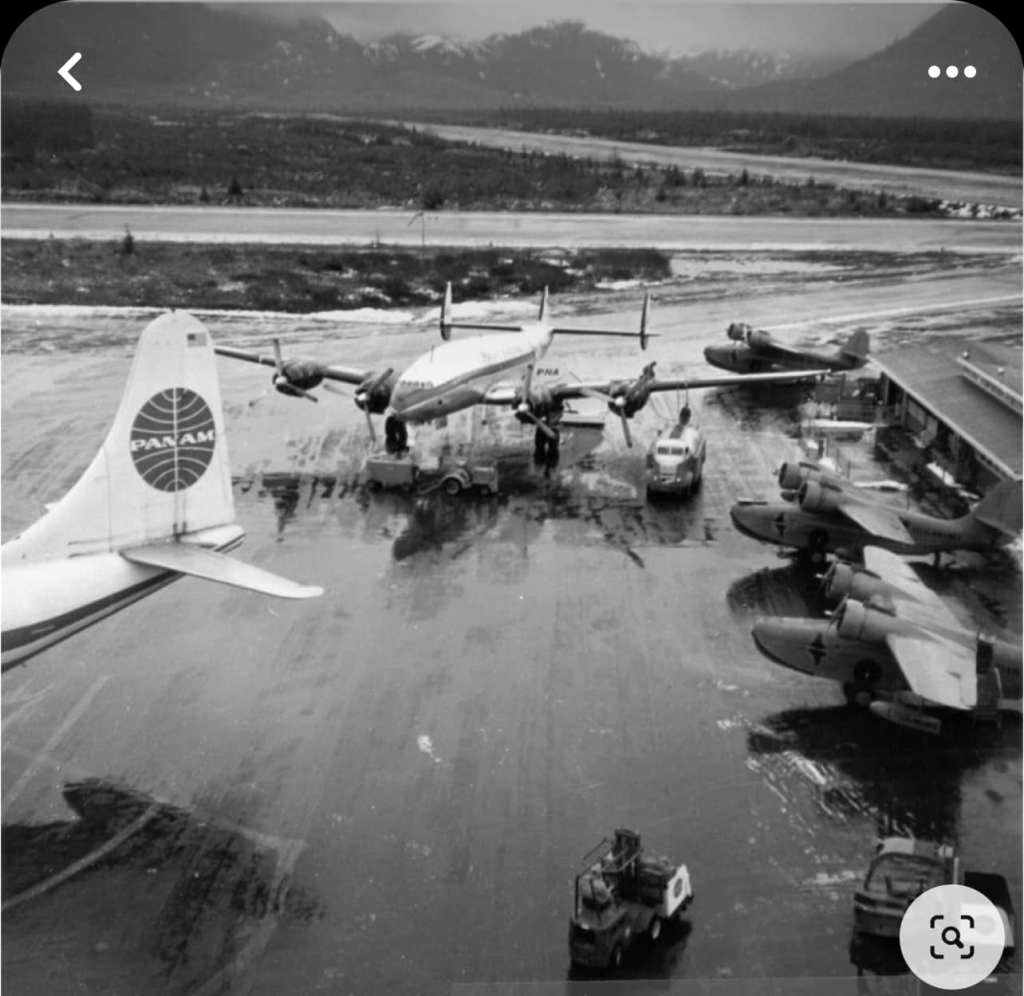
Historical airline service [edit] Prior to the opening of the Ketchikan International Airport (KTN) in 1973, the Annette Island Airport served as the primary airfield for scheduled passenger service for Ketchikan which is located approximately 20 air miles to the north. In 1947, Pan American World Airways was operating daily nonstop service to Seattle and Juneau with Douglas DC-4 prop aircraft with no change of plane flights operated twice a week to Whitehorse in the Yukon Territory of Canada via Juneau and then continuing on to Fairbanks, Galena and Nome in Alaska.[3] Pan Am later operated Douglas DC-6B and Boeing 377 Stratocruiser aircraft into the airport.[4] During the late 1950s, Pacific Northern Airlines (PNA, the successor of Woodley Airways) served the airport with Lockheed Constellation propliners with nonstop service to Seattle and Juneau as well as direct, no change of plane flights to Anchorage, Cordova and Yakutat.[5] The airport’s first jet service arrived during the early 1960s. In 1963, Pan Am was flying Boeing 707 jetliners into the airport with a daily roundtrip routing of Seattle – Annette Island – Juneau.[6] By 1965, Pacific Northern was operating Boeing 720 jetliners on nonstop flights to Seattle and Juneau as well as on direct services to Anchorage via Juneau.[7] In 1967, Pacific Northern was acquired by and merged into Western Airlines which continued to operate jet service into the airport.[8] By 1968, Western was serving the airport with Boeing 720B jetliners with nonstop service to Seattle and Juneau as well as direct, no change of plane flights to Portland, OR, San Francisco and Los Angeles.[9] In 1971, the federal Civil Aeronautics Board (CAB) awarded Alaska Airlines new route authority which enabled this air carrier to begin jet service into Annette Island Airport thus replacing Western.
With the opening of the Ketchikan International Airport in 1973, Annette Island lost all scheduled passenger jet flights as such airline service then moved to the then-new Ketchikan airport. Prior to the opening of the Ketchikan airport in 1973, Alaska Airlines was also operating scheduled flights with Super Catalina and Grumman Goose prop-driven amphibian aircraft on the short hop between Annette Island Airport and the Ketchikan Harbor Seaplane Base serving Ketchikan as well as to other local destinations in southeast Alaska.[10]

 Notes from Alex